Trumpism, the Recent Riots, and the Way Back to a Healthy Society
January 8, 2021

The old orders have broken down, and no new order can be contrived from the old foundations. The alternative is chaos; and in despair, the masses turn to the magician who promises to make the impossible possible…For if you are caught between the flood of the past, through which you cannot retrace your steps, and an apparently unscalable blank wall in front of you, it is only by magic and miracles that you can hope to escape.
— Peter F. Drucker, The End of Economic Man
On January 6, as Congress convened to recognize the results of the November election, Americans watched in horror as a mob of Trump supporters stormed the Capitol. During the “Save America” rally in Washington D.C., Trump encouraged the crowd to march to the Capitol, telling them that “We will never give up. We will never concede. It will never happen. You don’t concede when there’s theft involved. Our country has had enough. We will not take it anymore.” After the subsequent riot, 83 were arrested, five people were killed, including a police officer, and 50 police officers were injured. Images of people in MAGA gear breaking windows, trashing congressional offices, and stealing podiums from the senate floor engendered a collective response of disgust, shame, and disbelief. Is this what America has become?
In the days and weeks that follow, the nation will have to come to terms with what this paroxysm truly represents. Yes, there will be questions about events and details. Why was law enforcement so overwhelmed, when they knew about the “Save America” rally well in advance? Why was the police response to those violating the Capitol perimeter so mild, particularly when compared with the law enforcement response to the June 2020 Black Lives Matter protest in Lafayette Park, where police used batons, tear gas, horses, a helicopter, and well over 5000 National Guard troops to disperse the peaceful protestors. How complicit are Facebook, Twitter, and other social media platforms in promoting conspiracy theories that have fueled the deep divisions in this country?
But more importantly, we come to the question of leadership. Drucker’s management theories derive from his concept of a functioning society. In times of great change, particularly social upheaval, people need to hold on to some stability, retaining some institutions in which they can have faith, while others are experiencing rapid change. This balance between continuity and discontinuity drove much of Drucker’s work — both his writing on business and his social analyses. Innovation within an organization needs to be systematic, not haphazard and overly disruptive. Social and economic change is inevitable, but institutions cannot simply be thrown out wholesale. Leaders, therefore, are responsible for helping people through inevitable times of change, whether they lead companies or countries. As Drucker said, “Leadership is a foul-weather job.”
Which leads us to Drucker’s quote from his 1939 book, The End of Economic Man. Drucker, like many who escaped Nazi Germany, was attempting to come to grips with the reality of totalitarianism and its origins. What happened, and why? Drucker’s thesis is sophisticated, but one of the key components he identifies is a complete lack of hope combined by a failure of all social institutions. If there is nothing left of the past, the foundation of your society, you have nothing left to hold on to. If there is no hope in the future — merely an “unscalable blank wall in front of you” — then you have nowhere to go. Given this scenario, Drucker posits, people will look for “magic and miracles.” In Germany and Italy of the 1930s, that was fascism.
In the United States, Trumpism has become the “magic and miracles” that disaffected America has turned to. The post-mortems of the 2016 election are too many to count, but it is clear that much of what drove Trump’s support was a deep distrust of elites, particularly political elites, in American society. Trump’s promise to “drain the swamp” was aimed directly at this distrust. As increasingly educated women and minorities gained ground in the late 20th and early 21st centuries, uneducated American workers began to fall farther and farther behind. Rapid technological change and economic recession accelerated the job losses in manufacturing that had begun earlier, so the economic future for those without a college education was bleak indeed. Barack Obama modeled the achievement of a Harvard education and sharp legal mind, and an eye towards the future and progress. Trump’s appeal was not policy, but his promise to “make the impossible possible.” He would turn back the clock and bring back an America that no longer existed. However, this didn’t mean returning America to its values and shoring up its beloved institutions. That meant breaking down all of the norms and inherited history. Of course, this wouldn’t bring back jobs in coal mines. But it made people feel good because it gave them a way out of an impossible situation. One that made them feel really, really bad about themselves. By making enemies of the educated elite, of minorities, of the very democratic institutions this country was founded on, those alienated by a rapidly changing world could hold on to some chance to escape. Even if that meant burning down the house on the way out.
All this is to say that Drucker, as a social ecologist, would have seen this all coming. Trump repeatedly, on social media and during his rallies, undermined the 2020 election (even before the election itself, claiming that the only way he would lose would be if the election was rigged). After all, Trump is a charismatic leader, and Drucker greatly feared that leadership style. He said that leadership has very little to do with charisma. Rather, “It is mundane, unromantic, and boring. Its essence is performance.” Leadership, in the Drucker sense, would have prevented this entire situation. A true leader would never have exhorted his followers in Washington D.C. to “show strength” and “fight” when they marched to the Capitol, which was filled with elected officials doing the people’s business. A true leader would have told the truth. We lost. We fought hard, but now is the time to respect the institutions of democracy. But this leader has repeatedly undermined those very institutions. So, it is not surprising to see this ultimate trashing of the buildings that epitomize our representative democracy.
We have other leadership to hold accountable for this. The Republican leadership who has looked the other way — until now. Mitch McConnell, Lindsay Graham and others seem to have finally decided that this is not the kind of leadership they want to be associated with. 140 Republicans in the House of Representatives still chose not to recognize the results of the election, even after the melee in the Capitol on January 6. The business community supported this administration — until now. The National Association of Manufacturers, Business Roundtable, and U.S. Chamber of Commerce are backpedaling away from Trump. If, as Drucker says, leadership is about trust, ethics, and modeling right behavior, then these “leaders” should long ago have distanced themselves from a charismatic leader who failed to truly lead. Instead, these Republican and business leaders chose to close their eyes to the true nature of Trumpism, and instead only looked at policy (or their fear of losing their jobs). But Trumpism isn’t about policy. It’s about a magician making promises.
How do we move forward? First and foremost, we must restore faith in our institutions of democracy. Drucker’s functioning society can only work if we have that. The Biden administration has an unfathomable amount of work ahead of it. If we have a significant percentage of our population who really believes that our democratic institutions and processes are broken, we cannot function as a society. It does not matter if businesses thrive. It does not matter if kids are in school. The first thing we must do is make sure that we still have a functioning democratic society. We somehow must work to convince those who believe in the magician that they are still part of a society that includes them. And that is a real challenge, given what we saw this week.
Yes, America. This is what we have become. But we can change it. Together.
— Peter F. Drucker, The End of Economic Man
On January 6, as Congress convened to recognize the results of the November election, Americans watched in horror as a mob of Trump supporters stormed the Capitol. During the “Save America” rally in Washington D.C., Trump encouraged the crowd to march to the Capitol, telling them that “We will never give up. We will never concede. It will never happen. You don’t concede when there’s theft involved. Our country has had enough. We will not take it anymore.” After the subsequent riot, 83 were arrested, five people were killed, including a police officer, and 50 police officers were injured. Images of people in MAGA gear breaking windows, trashing congressional offices, and stealing podiums from the senate floor engendered a collective response of disgust, shame, and disbelief. Is this what America has become?
In the days and weeks that follow, the nation will have to come to terms with what this paroxysm truly represents. Yes, there will be questions about events and details. Why was law enforcement so overwhelmed, when they knew about the “Save America” rally well in advance? Why was the police response to those violating the Capitol perimeter so mild, particularly when compared with the law enforcement response to the June 2020 Black Lives Matter protest in Lafayette Park, where police used batons, tear gas, horses, a helicopter, and well over 5000 National Guard troops to disperse the peaceful protestors. How complicit are Facebook, Twitter, and other social media platforms in promoting conspiracy theories that have fueled the deep divisions in this country?
But more importantly, we come to the question of leadership. Drucker’s management theories derive from his concept of a functioning society. In times of great change, particularly social upheaval, people need to hold on to some stability, retaining some institutions in which they can have faith, while others are experiencing rapid change. This balance between continuity and discontinuity drove much of Drucker’s work — both his writing on business and his social analyses. Innovation within an organization needs to be systematic, not haphazard and overly disruptive. Social and economic change is inevitable, but institutions cannot simply be thrown out wholesale. Leaders, therefore, are responsible for helping people through inevitable times of change, whether they lead companies or countries. As Drucker said, “Leadership is a foul-weather job.”
Which leads us to Drucker’s quote from his 1939 book, The End of Economic Man. Drucker, like many who escaped Nazi Germany, was attempting to come to grips with the reality of totalitarianism and its origins. What happened, and why? Drucker’s thesis is sophisticated, but one of the key components he identifies is a complete lack of hope combined by a failure of all social institutions. If there is nothing left of the past, the foundation of your society, you have nothing left to hold on to. If there is no hope in the future — merely an “unscalable blank wall in front of you” — then you have nowhere to go. Given this scenario, Drucker posits, people will look for “magic and miracles.” In Germany and Italy of the 1930s, that was fascism.
In the United States, Trumpism has become the “magic and miracles” that disaffected America has turned to. The post-mortems of the 2016 election are too many to count, but it is clear that much of what drove Trump’s support was a deep distrust of elites, particularly political elites, in American society. Trump’s promise to “drain the swamp” was aimed directly at this distrust. As increasingly educated women and minorities gained ground in the late 20th and early 21st centuries, uneducated American workers began to fall farther and farther behind. Rapid technological change and economic recession accelerated the job losses in manufacturing that had begun earlier, so the economic future for those without a college education was bleak indeed. Barack Obama modeled the achievement of a Harvard education and sharp legal mind, and an eye towards the future and progress. Trump’s appeal was not policy, but his promise to “make the impossible possible.” He would turn back the clock and bring back an America that no longer existed. However, this didn’t mean returning America to its values and shoring up its beloved institutions. That meant breaking down all of the norms and inherited history. Of course, this wouldn’t bring back jobs in coal mines. But it made people feel good because it gave them a way out of an impossible situation. One that made them feel really, really bad about themselves. By making enemies of the educated elite, of minorities, of the very democratic institutions this country was founded on, those alienated by a rapidly changing world could hold on to some chance to escape. Even if that meant burning down the house on the way out.
All this is to say that Drucker, as a social ecologist, would have seen this all coming. Trump repeatedly, on social media and during his rallies, undermined the 2020 election (even before the election itself, claiming that the only way he would lose would be if the election was rigged). After all, Trump is a charismatic leader, and Drucker greatly feared that leadership style. He said that leadership has very little to do with charisma. Rather, “It is mundane, unromantic, and boring. Its essence is performance.” Leadership, in the Drucker sense, would have prevented this entire situation. A true leader would never have exhorted his followers in Washington D.C. to “show strength” and “fight” when they marched to the Capitol, which was filled with elected officials doing the people’s business. A true leader would have told the truth. We lost. We fought hard, but now is the time to respect the institutions of democracy. But this leader has repeatedly undermined those very institutions. So, it is not surprising to see this ultimate trashing of the buildings that epitomize our representative democracy.
We have other leadership to hold accountable for this. The Republican leadership who has looked the other way — until now. Mitch McConnell, Lindsay Graham and others seem to have finally decided that this is not the kind of leadership they want to be associated with. 140 Republicans in the House of Representatives still chose not to recognize the results of the election, even after the melee in the Capitol on January 6. The business community supported this administration — until now. The National Association of Manufacturers, Business Roundtable, and U.S. Chamber of Commerce are backpedaling away from Trump. If, as Drucker says, leadership is about trust, ethics, and modeling right behavior, then these “leaders” should long ago have distanced themselves from a charismatic leader who failed to truly lead. Instead, these Republican and business leaders chose to close their eyes to the true nature of Trumpism, and instead only looked at policy (or their fear of losing their jobs). But Trumpism isn’t about policy. It’s about a magician making promises.
How do we move forward? First and foremost, we must restore faith in our institutions of democracy. Drucker’s functioning society can only work if we have that. The Biden administration has an unfathomable amount of work ahead of it. If we have a significant percentage of our population who really believes that our democratic institutions and processes are broken, we cannot function as a society. It does not matter if businesses thrive. It does not matter if kids are in school. The first thing we must do is make sure that we still have a functioning democratic society. We somehow must work to convince those who believe in the magician that they are still part of a society that includes them. And that is a real challenge, given what we saw this week.
Yes, America. This is what we have become. But we can change it. Together.

Peter Drucker’s memoir, Adventures of a Bystander, is a self-portrait of a most unusual kind. It reveals its subject not through direct autobiography, but through a series of incisive portraits of the people he encountered throughout a tumultuous life. Drucker positions himself as a "bystander," but this is no passive observer. Instead, he is an intellectual portraitist whose careful study of others becomes the very method by which he comes to understand himself and the fractured world he inhabited.

This essay was inspired by an article recently published by Karen Linkletter and Pooya Tabesh (2025). They were in search of the meaning of “decision” in the works of Peter Drucker. To this end, they used Python to identify and locate all the times the word, “decision”, came up in Peter Drucker’s oeuvre . They then characterized the contexts (“themes”) in which the word came up. The result was a nuanced but very clear characterization of the evolution of his thinking on the topic. Here, we will focus on a key theme for Drucker: the case where your decisions involve other people’s decisions and actions . For present purposes, we can start with their statement: One of Drucker’s valuable contributions to the literature on decision-making is his adamance that implementation be built into the decision-making process.” (Linkletter and Tabesh 2025 8) To be clear, “…it is not a surprise that his integration of implementation of and commitment to decisions is part of his process of decision-making. He argues that a decision “has not been made until it has been realized in action.” (2025 8) The question, therefore, is how to make this happen, how to turn an organization from an aggregate of individuals whose decisions may or may not be aligned, into an agent—an entity that makes decisions, implements them, and then ascertains that what was done was, in fact, what was decided, as we try to do when making purely individual decisions. Let’s look at the matter more closely… A few years ago, I read a story about a road crew that was painting a double-yellow line on a highway. In their path was a dead raccoon that had been hit by a car or truck. It was lying right in the middle of the road. The crew didn’t stop. Someone later took a picture of the dead raccoon with a double-yellow line freshly painted right over it. The picture is below. It went viral on the Internet.

When Paul Polman became CEO of Unilever in 2009, he did not inherit a troubled company. He stepped into a large global enterprise with familiar consumer brands that sat on shelves in cities from Amsterdam to Manila. Even with that scale and reach, the business rested on foundations that were beginning to crack. Public faith in multinational firms was fading, climate change was moving from a distant worry to a financial reality, and investors were increasingly locked into the rhythm of quarterly results that encouraged short term decisions and discouraged real strategy.
Peter Drucker suggested that readers view his first three books as a unified body of work: The End of Economic Man(1939), The Future of Industrial Man (1942), and Concept of the Corporation (1946). These works share a common theme: politics. Drucker did not think about politics like scholars who strictly follow modern social science norms. Instead, he viewed politics as part of social ecology and understood political events through the dynamic changes in social ecology. Despite having "corporation" in its title and using General Motors as a case study, Concept of the Corporation is indeed a book about politics. In this work, Drucker attempts to address the main issues that industrial society must resolve: the legitimacy of managerial authority, the status and function of managers and workers, and the power structure of society and organizations. In Drucker's own words, this is a book exploring the specific principles of industrial society. Corresponding to these specific social principles, Drucker had earlier attempted to develop a general social theory, which was the aim of The End of Economic Man and The Future of Industrial Man. The subtitle of The End of Economic Man is "The Origins of Totalitarianism." The book focuses on how society disintegrates in industrial societies and how totalitarianism rises. For Drucker, the real challenge of this topic isn't explaining how Hitler and Mussolini came to power, nor the actions of Germany and Italy in government, military, and economic spheres. Rather, it's understanding why some Europeans accepted clearly absurd totalitarian ideologies, and why others seemed potentially receptive to them. Drucker's writing style is argumentative. He clearly knew that to effectively advance his arguments, he needed to engage with popular theories of his time. Back then, there were two main explanatory approaches to Nazism and Fascism, which Drucker termed "illusions." Some viewed totalitarianism as ordinary political turmoil similar to previous historical revolutions. In their view, totalitarianism was characterized merely by cruelty, disruption of order, propaganda, and manipulation. Others considered totalitarianism a phenomenon unique to Germany and Italy, related to their specific national characters. Drucker thoroughly refuted explanations based on "national character." He believed that any historical approach appealing to "national character" was pseudo-history. Such theories always emphasize that certain events were inevitable in certain places. But all claims of "inevitability" negate human free will and thus deny politics: without human choice, there is no politics. If the rise of totalitarianism were inevitable, there would be no need or possibility to oppose it. Viewing totalitarianism as an ordinary revolution is equally dangerous. This thinking merely emphasizes how bad Nazis and Fascists were. But the real issue is that Europeans were not merely submitting out of fear—they were actually attracted to totalitarianism. And those attracted weren't just the ignorant masses but also well-educated intellectual elites, especially the younger generation. The world cannot defeat totalitarianism through contempt alone, especially if that contempt stems from ignorance. Understanding the enemy is a prerequisite to defeating it. Drucker identified three main characteristics of Nazism and Fascism (totalitarianism is a social type, with Nazism and Fascism being its representatives in industrialized Europe): 1. The complete rejection of freedom and equality, which are the core beliefs of European civilization, without offering any positive alternative beliefs. 2. The complete rejection of the promise of legitimate power. Power must have legitimacy—this is a long-standing tradition in European politics. For power to have legitimacy means that it makes a commitment to the fundamental beliefs of civilization. Totalitarianism denied all European beliefs, thereby liberating power from the burden of responsibility. 3. The discovery and exploitation of mass psychology: in times of absolute despair, the more absurd something is, the more people are willing to believe it. The End of Economic Man develops a diagnosis of totalitarianism around these three characteristics. Drucker offers a deeper insight: totalitarianism is actually a solution to many chronic problems in industrial society. At a time when European industrial society was on the verge of collapse, totalitarians at least identified the problems and offered some solutions. This is why they possessed such magical appeal. Why did totalitarianism completely reject the basic beliefs of European civilization? Drucker's answer: neither traditional capitalism nor Marxist socialism could fulfill their promises of freedom and equality. "Economic Man" in Drucker's book has a different meaning than in Adam Smith's work. "Economic Man" refers to people living in capitalist or socialist societies who believe that through economic progress, a free and equal world would "automatically" emerge. The reality was that capitalism's economic freedom exacerbated social inequality, while socialism not only failed to eliminate inequality but created an even more rigid privileged class. Since neither capitalism nor socialism could "automatically" realize freedom and equality, Europeans lost faith in both systems. Simultaneously, they lost faith in freedom and equality themselves. Throughout European history, people sought freedom and equality in different social domains. In the 19th century, people projected their pursuit of freedom and equality onto the economic sphere. The industrial realities of the 20th century, along with the Great Depression and war, shattered these hopes. People didn't know where else to look for freedom and equality. The emerging totalitarianism offered a subversive answer: freedom and equality aren't worth pursuing; race and the leader are the true beliefs. Why did totalitarianism reject the promise of power legitimacy? One reason was that political power abandoned its responsibility to European core beliefs. Another reason came from the new realities of industrial society. Drucker held a lifelong view: the key distinction between industrial society and 19th-century commercial society was the separation of ownership and management. The role of capitalists was no longer important. Those who truly dominated the social industrial sphere were corporate managers and executives. These people effectively held decisive power but had not gained political and social status matching their power. When a class's power and political status don't match, it doesn't know how to properly use its power. Drucker believed this was a problem all industrial societies must solve. Totalitarianism keenly perceived this issue. The Nazis maintained property rights for business owners but brought the management of factories and companies under government control. This way, social power and political power became unified. This unified power was no longer restricted or regulated—it became the rule itself. Why could totalitarianism make the masses believe absurd things? Because Europeans had nothing left to believe in. Each individual can only understand society and their own life when they have status and function. Those thrown out of normal life by the Great Depression and war lost their status and function. For them, society was a desperate dark jungle. Even those who temporarily kept their jobs didn't know the meaning of their current life. The Nazi system could provide a sense of meaning in this vacuum of meaning—though false, it was timely. Using the wartime economic system, the Nazis created stable employment in a short time. In the Nazi industrial system, both business owners and workers were exploited. But outside the industrial production system, Nazis created various revolutionary organizations and movements. In those organizations and movements, poor workers became leaders, while business owners and professors became servants. In the hysterical revolutionary fervor, people regained status and function. Economic interests were no longer important, freedom and equality were no longer important; being involved in the revolution (status) and dying for it (function) became life's meaning. The Nazis replaced the calm and shrewd "Economic Man" with the hysterical "Heroic Man." Though absurd, this new concept of humanity had appeal. What people needed was not rationality but a sense of meaning that could temporarily fill the void. Those theorists who despised totalitarianism only emphasized its evil. Drucker, however, emphasized its appeal. He viewed totalitarianism as one solution to the crisis of industrial society. From 19th-century commercial society to 20th-century industrial society, the reality of society changed dramatically. 19th-century ideas, institutions, and habits could not solve 20th-century problems. Capitalism could not fulfill its promises about freedom and equality, and neither could Marxism. It was at this point that totalitarianism emerged. Nazism and Fascism attempted to build a new society in a way completely different from European civilization. Drucker said the real danger was not that they couldn't succeed, but that they almost did. They addressed the relationship between political power and social power, proposed alternative beliefs to freedom and equality (though only negative ones), and on this basis provided social members with new status and function. The war against totalitarianism cannot be waged merely through contempt. Defeating totalitarianism is not just a battlefield matter. Those who hate totalitarianism and love freedom must find better solutions than totalitarianism to build a normally functioning and free industrial society. Totalitarianism gave wrong and evil answers. But they at least asked the right questions. Industrial society must address several issues: the legitimacy of power (government power and social power), individual status and function, and society's basic beliefs. These issues became the fundamental threads in Drucker's exploration of industrial society reconstruction in The Future of Industrial Man. The Future of Industrial Man: From Totalitarian Diagnosis to General Social Theory Both The End of Economic Man and The Future of Industrial Man feature the prose style of 19th-century historians. Even today, readers can appreciate the author's profound historical knowledge and wise historical commentary. For today's readers, the real challenge of these two books lies in Drucker's theoretical interests. He doesn't simply narrate history but organizes and explains historical facts using his unique beliefs and methods. In The End of Economic Man, Drucker developed his diagnosis of totalitarianism around three issues: power legitimacy, individual status-function, and society's basic beliefs. In The Future of Industrial Man, he also constructs a general social theory around these three issues. In "What Is A Functioning Society," Drucker explains three sets of tensions that exist in social ecology:

Last semester, two students approached me to advise their AI-based graduate projects at a time when no one else in the department was available or willing to take them on. Our department lacked sufficient faculty with software or AI specialization at the time to support the growing number of requests in this area.

When Marc Benioff founded Salesforce in 1999, Silicon Valley had a pretty straightforward playbook which was technological disruption at any cost. Profit, scale, and market capture dominated corporate ambition. Benioff, who worked under Steve Jobs at Apple and explored Buddhist philosophy, was not satisfied with that approach. He envisioned a company that would not only revolutionize enterprise software through the cloud but also redefine the social purpose of business itself. His leadership at Salesforce reflects Peter Drucker's concept of Management as a Liberal Art (MLA). This idea holds that management is not just about efficiency or growth, but about making work human, creating meaning, and building institutions that serve society (Drucker, 1989).
What is Soft Power?
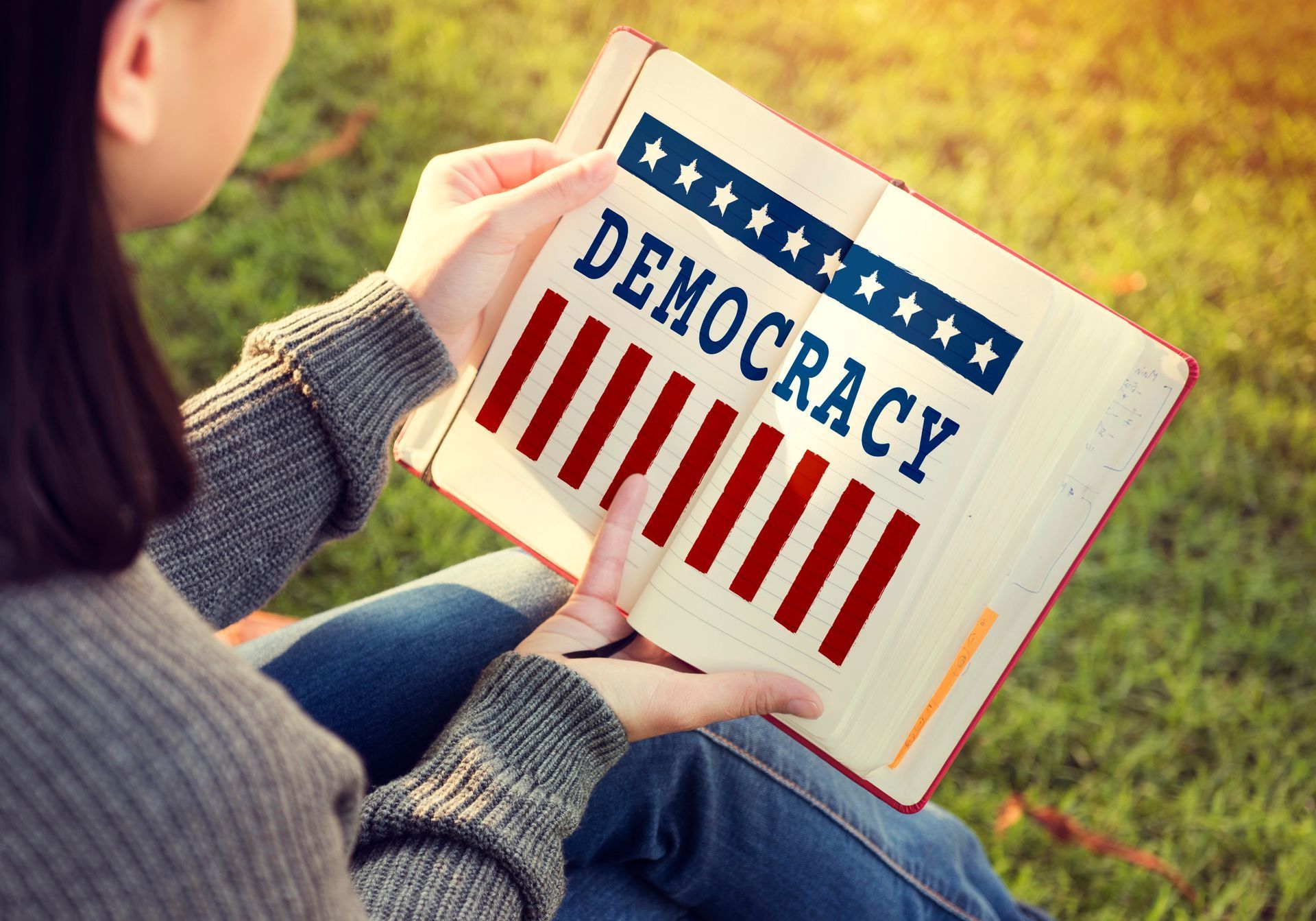
Previously, I shared de Tocqueville’s concept of equality of condition and how it is manifesting in today’s perception that democracy has failed to deliver on its promise of economic and social equality for all. Promises of economic equality are impossible to fulfill; but democratic societies can and should offer all of their members dignity and a sense of purpose. In this final installment, I’ll share de Tocqueville’s prescriptions for shoring up the institutions of a democratic society – as well as some of his warnings about challenges that democracies face.

Over the past two decades, there has been a discernible shift in the professional workforce. Increasingly, individuals have chosen to leave traditional corporate environments in favor of smaller ventures, entrepreneurial efforts, and purpose-driven careers. This migration has been fueled by a desire for greater autonomy, meaningful impact, and freedom from the rigidity of hierarchical organizational structures. As the world continues to undergo sweeping changes—economic, technological, and social—professionals are finding themselves at a crossroads. The COVID-19 pandemic only accelerated this reckoning, forcing people across industries to reevaluate their relationship with work, identity, and independence.
In Part I of this series, I gave a brief overview of Alexis de Tocqueville’s background and project of evaluating American Democracy in the early 19 th century. In this new installment, I’d like to share de Tocqueville’s observations about the nature of equality in America and how what he saw might help us understand some of the challenges democracies face today.